Global buyers are looking beyond equipment price when evaluating sous vide cooking. They also consider consistency, labor, energy use, food safety, and supplier support. Restaurants, hotels, caterers, and meal producers face different demands, but all need dependable results on busy service days. A precisely controlled water bath can help produce evenly cooked portions, from tender chicken breast to salmon with a delicate center. The details matter.
What are the benefits of sous vide cooking for buyers serving varied markets? The answer includes portion consistency, flexible preparation, and the potential to reduce avoidable overcooking. The United Nations Environment Programme’s Food Waste Index Report 2024 estimated that 1.05 billion tonnes of food were wasted worldwide in 2022, equal to about 19% of food available to consumers. That figure is not specific to sous vide, and this method cannot solve food waste alone. Still, better control over cooking can support careful production planning.
For buyers, the seven benefits should be weighed against practical limits. Vacuum packaging, staff training, storage capacity, and validated time-and-temperature procedures all affect results. The FDA Food Code provides guidance for food establishments using reduced-oxygen packaging, including sous vide processes; buyers should confirm applicable local requirements with qualified food-safety professionals. A machine can hold a target temperature, but it cannot replace sound procedures. This guide examines the advantages, trade-offs, and purchasing considerations that matter across global foodservice operations.
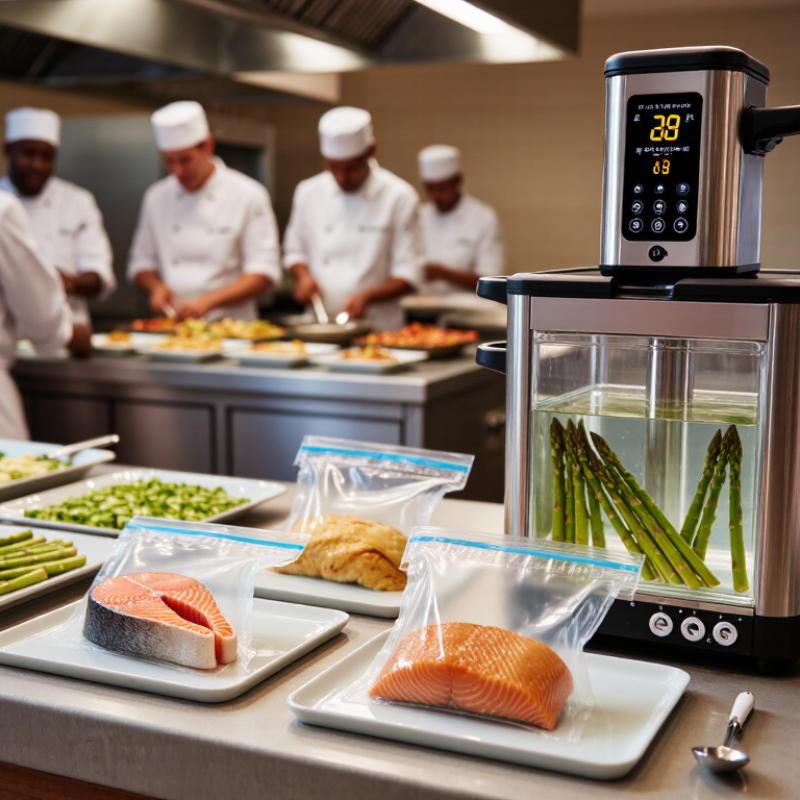
How Sous Vide Cooking Works: Temperature Control and Water-Bath Circulation
Sous vide cooking places sealed food in a water bath held at a chosen temperature. A circulator moves water around each pouch, reducing hot and cool spots that can form in a still bath. Heat travels from the water through the bag and into the food’s center. The result can be even doneness, especially in thick cuts. But the bath setting alone does not determine safety or texture; thickness, starting temperature, and time all matter. There is a catch.
The USDA FSIS Cooking Guideline for Meat and Poultry Products, Revised Appendix A, treats pathogen reduction as a time-and-temperature process. In practice, cooks need a validated schedule for the food and its thickness, not just a target temperature. After cooking, chilling also matters: the FDA Food Code 2022 specifies cooling cooked time/temperature-control foods from 135°F to 70°F within two hours, then to 41°F within six hours total. Those limits concern cooling, not sous vide cooking, and local food rules may differ. A probe thermometer and careful records help check the process. Even then, home cooks can miss a detail.
Benefit 1: Consistent Results Through Precise Temperature Control
Sous vide holds food in a circulating water bath at a chosen temperature, reducing the swings common with ovens or pans. A salmon fillet can stay tender from edge to center, while a steak avoids the wide gray band that often forms during searing. Small differences matter. The FDA Food Code 2022 lists minimum cooking combinations such as 145°F for 15 seconds for fish and 165°F for poultry. These are reference points, not universal sous vide recipes; thickness, starting temperature, and holding time also affect safety.
Food safety reference points
The FDA Food Code 2022 lists minimum cooking combinations, including 145°F for 15 seconds for fish and 165°F for poultry. These are reference points—not universal sous vide recipes.
For buyers serving varied menus, repeatability can simplify staff training and portion planning. USDA FSIS Appendix A (2021) provides validated time-temperature combinations for meat and poultry lethality, underscoring that safe cooking depends on both factors. A bath set to 60°C, for example, can bring evenly cut portions toward a similar doneness across a service. But the setting is only as trustworthy as the equipment and process. Check bath temperature with a calibrated thermometer, allow water to circulate, and follow a validated time schedule. Thick cuts may need longer than expected. Precision helps, but it does not remove every judgment call.
Benefits 2 and 3: Improved Flavor, Texture, and Nutrient Retention
Sous vide can make flavor more consistent across batches. Food cooks in a sealed pouch, so juices and aromatic compounds have less opportunity to escape into a pan or pot. A chicken breast sliced open can stay moist, while herbs and citrus leave a clear, gentle aroma in the bag. Texture benefits from controlled heat: a narrow temperature range reduces the risk of dry edges and an overcooked center. Baldwin’s 2012 review in the International Journal of Gastronomy and Food Science explains that sous vide safety depends on both temperature and holding time. Precision matters. It is not simply “low and slow.”
Nutrient retention may also improve when vegetables cook in a sealed pouch, because fewer water-soluble nutrients can leach into discarded cooking water. The outcome still depends on the ingredient, temperature, and cooking duration; heat-sensitive vitamins can degrade. This is a useful advantage, not a guarantee. For global buyers, repeatable texture and portion-level consistency can help kitchens standardize meals across locations, though staff still need clear time-temperature procedures.
Tips: Test one ingredient and portion size at a time. Record the temperature, hold time, and texture after chilling or reheating. A pouch can preserve juices, but it cannot fix poor raw-material quality.
7 Best Benefits of Sous Vide Cooking for Global Buyers
Benefits 2 & 3: Improved Flavor, Texture, and Nutrient Retention
Sous vide’s controlled temperature helps produce more consistent doneness and texture. Cooking in a sealed pouch can also limit the loss of water-soluble compounds into discarded cooking water; juices and dissolved compounds remain in the pouch. Temperature bands shown are indicative culinary targets, not food-safety instructions. Safe cooking depends on time, thickness, and handling.
Benefits 4 and 5: Greater Convenience, Efficiency, and Reduced Food Waste
Sous vide can make busy kitchen routines easier to plan. Staff portion ingredients into individual bags, season them, and load a temperature-controlled water bath. Once cooking begins, there is less need to watch every pan. Less rush. This helps when orders arrive in waves or several dishes need different finishing times. The method still requires planning, and many foods need a quick sear before serving.
For buyers serving varied markets, repeatable steps can simplify training across shifts. A clear record of cooking temperatures, times, batch sizes, and cooling procedures helps teams maintain consistent results. It also makes production easier to schedule: a kitchen can prepare portions ahead, then finish them close to service. That matters. However, water-bath capacity is limited, and crowded bags can heat unevenly, so batch size should be tested rather than guessed.
Portioning before cooking can also reduce waste. Teams can prepare only the number of servings they expect to sell, instead of holding a large tray that may dry out or remain unsold. Sealed portions can help protect food during storage when handling and refrigeration are managed correctly. Still, sous vide does not prevent waste by itself. Poor forecasting, unclear labels, or weak temperature controls can undo the benefit.
Benefits 6 and 7: Versatile Menus and Reliable Quality for Global Buyers
Sous vide gives global buyers a flexible production tool, not a fixed menu. A kitchen can prepare chicken, fish, vegetables, and grains at controlled temperatures, then finish portions with local spices or sauces. One base preparation can support several regional dishes. That helps buyers adapt menus across markets without changing every production step. Small batches work, too.
Consistency matters when teams serve many locations. The National Restaurant Association’s 2024 State of the Restaurant Industry report projected U.S. restaurant sales of $1.1 trillion that year, reflecting the scale operators must manage. Precise temperature control can help reduce variation between batches, but it does not guarantee identical results. Ingredient size, sealing, timing, and staff technique still matter. Not a cure-all.
Reliable portioning may also support tighter production planning. UNEP’s Food Waste Index Report 2024 estimates that 1.05 billion tonnes of food were wasted in 2022 across households, food service, and retail. Sous vide alone will not solve that problem, but measured portions and planned cooking cycles can help limit overproduction. Operators still need validated time-temperature procedures, careful chilling where applicable, and regular staff training. A weak seal can spoil the plan.
FAQS
Food cooks inside a sealed pouch in a temperature-controlled water bath. A circulator moves the water, helping heat reach the food more evenly.
No. Food thickness, starting temperature, cooking time, and a validated schedule all matter. A thermometer and clear records can help, but details are easy to miss.
Controlled heat can reduce dry edges and an overcooked center, especially in thick cuts. Results still vary with portion size and handling.
It can keep juices and aromas close to the food. Herbs and citrus may leave a gentle scent, though a pouch cannot rescue poor-quality ingredients.
Sealed cooking may reduce the loss of water-soluble nutrients into discarded water. It is not a guarantee; heat-sensitive vitamins can still degrade.
Yes. A kitchen can prepare a base portion, then add regional spices or sauces. Small batches are possible, but staff technique still matters.
Measured portions and planned cooking cycles can help teams manage production. They cannot ensure identical results across batches.
Follow validated time-and-temperature procedures, and cool food carefully where required. The FDA Food Code specifies staged cooling limits, but local rules may differ. A weak pouch seal can ruin the plan.
Conclusion
What are the benefits of sous vide cooking for global buyers? This method uses a controlled water bath to cook food at a carefully selected temperature, while circulation helps maintain even heat around each portion. Precise temperature control supports consistent results, reducing the risk of overcooking and helping kitchens produce dishes with dependable doneness.
Sous vide can also help preserve flavor, tender texture, and nutrients by cooking food in a sealed pouch. Its predictable process can simplify preparation, improve kitchen efficiency, and reduce waste by making portions and cooking outcomes easier to manage. The method suits a wide range of ingredients and menu styles, giving food businesses flexibility across different markets. For buyers seeking reliable quality and repeatable results, sous vide offers a practical approach to both everyday service and varied culinary needs.

 K-Mama Cook